iTBS 10x/day
The 5-Day Accelerated TMS Protocol
Fifty treatment sessions delivered over five consecutive days. A complete course of treatment, finished in the time most people can take off work once.
This is the most studied of the accelerated schedules, and the one we recommend most often to patients travelling in or clearing a single week. It is delivered at our Tomball office, north of Houston.
- Time in clinic
- 5 consecutive days, about 9 hours each
- Sessions per day
- 10
- Total sessions
- 50
- Session length
- approximately 10 minutes
How the five-day protocol works
Ten sessions a day, five days running. Each session delivers 1,800 pulses of theta burst stimulation to the left prefrontal cortex, the area at the front of the brain that TMS treats for depression, and takes about ten minutes.
How long are the gaps between sessions?
About fifty minutes, and the gap is part of the treatment rather than a wait. Fifty minutes is the interval used in the trials this protocol comes from, and when researchers pooled 59 accelerated TMS studies covering 2,908 patients, the spacing that performed best in the randomized trials fell in a window of roughly 30 to 75 minutes. The thinking is that each session's effect needs time to take hold, and that it builds across the day rather than within any one session.
How much stimulation is that in total?
Fifty sessions of 1,800 pulses each, so 90,000 pulses across the week. That figure is not directly comparable with a standard course, because theta burst and conventional TMS do not deliver the same kind of pulse: a landmark trial found 600 theta burst pulses worked as well as 3,000 conventional ones in a single session. The comparison that does hold is within theta burst itself, where pooling 59 accelerated studies showed that the total pulses delivered across a course tracked with how well patients did. Those courses ranged from about 11,000 to 120,000 pulses, and this schedule sits near the top.
How do you find the treatment site?
Dr. Nazarani locates it himself at brain mapping, a separate appointment before your first treatment day. He uses scalp-based measurement, the established method in TMS: the site is measured from fixed landmarks on your head, after the stimulation strength is calibrated to your own motor threshold, which is the lowest setting that produces a small movement in your hand. That calibration is why two patients with the same diagnosis do not receive identical settings.
Regulatory status
This protocol is covered by the accelerated clearance the FDA granted for the MagVenture system in May 2026: two to ten sessions a day, with or without MRI, for adults with major depression that has not improved on antidepressant medication during this episode of illness.
A clearance describes what a device may be used to deliver. It is not a rating of how well a protocol works. What the research shows is below.
What the week looks like
Plan for five consecutive weekdays in clinic, about nine hours each day. Bring what you would bring to a long working day.
- 1
Before the week begins
A consultation with Dr. Nazarani establishes whether TMS is right for you and whether this is the right protocol. If you are travelling in, this is done by phone or video. Brain mapping is a separate appointment before your first treatment day, where the stimulation is calibrated to you and the treatment site is set.
- 2
Each treatment day
Ten sessions, spaced roughly fifty minutes apart, which makes a clinic day of about nine hours. Each session itself is about ten minutes. You are seated, fully awake, and free to read, work, eat, or step outside between sessions. The gaps are yours.
- 3
Days two through five
The same structure repeats. Most people find the scalp sensation easiest to tolerate by the second or third day. Feeling tired by mid-week is common and expected.
- 4
The week after
Most patients feel relatively little change straight away. That is the normal pattern and not a sign that treatment has failed.
- 5
Weeks two through six
This is when improvement typically builds and when we assess how you have responded. If you have travelled home, those follow-up appointments can be done remotely.
You can drive yourself to and from the clinic each day, and you do not need anyone to come with you.
Who this protocol suits
You can clear one week, but not six
This is the central case. If what has stood between you and TMS is the prospect of daily appointments stretched across a month and a half, five consecutive days is a different proposition entirely. One block of time off, once.
You are travelling to Houston for treatment
Patients come to Tomball from around Texas and from out of state. Five days is a trip rather than a relocation. The consultation happens before you travel and follow-up happens after you go home, so the week here is treatment only.
You want the accelerated schedule with the most research behind it
Of the accelerated schedules, this one has been studied the most: several controlled trials, an independent repeat of the main trial by a different research group, and results from patients treated outside of trials.
You have depression that has not responded to medication
The clearance covers adults with major depression that has not improved on antidepressant medication during this episode of illness. That includes people whose depression comes with anxiety.
Standard TMS may still be the better choice. If you have insurance coverage for TMS and your schedule allows daily visits, your out-of-pocket cost is very likely to be lower than self-pay accelerated treatment, and the standard course has the longest track record of any TMS approach.
TMS is not right for everyone. Metal implants in or near the head, a history of seizures, and certain neurological conditions are among the things we screen for. Whether this protocol suits you is decided at your consultation with Dr. Nazarani.
What the research shows
This is the most studied of the accelerated schedules. The question it answers is not whether compressing a course beats the standard schedule. It is whether you can compress it and still get the benefit.
Where does this protocol come from?
It follows the five-day schedule developed and published at Stanford: 1,800 pulses a session, ten sessions a day, fifty sessions across five consecutive days, spaced about fifty minutes apart. That schedule is also delivered commercially under the SAINT name, which is a trademark of Magnus Medical. We are not a SAINT provider. What we deliver is the published schedule, on our MagVenture system, within its FDA clearance.
How well does it work?
Across the published studies of this five-day schedule, remission rates have ranged from roughly 50% to 90%. That spread is the ordinary shape of evidence as it accumulates, in TMS as in any treatment: the first case series was small and reported the highest figures, the first randomized trial was also small and reported high ones, and the larger randomized trials since have settled nearer 50 to 60%, in line with other forms of TMS. Response means symptoms dropped by at least half; remission means symptoms were minimal or gone. In every one of these studies the patients had depression that had already failed to improve on medication. For comparison, in STAR*D, the largest study of antidepressant medication, approximately 13% of patients reached remission on their fourth medication.
So what does compressing the schedule cost you?
As far as the evidence goes, it does not cost you the benefit. You get the same kind of result a standard course aims for, and you finish in five days instead of six weeks.
When would I expect to feel different?
In most cases, not during the treatment week itself. Improvement usually builds over the weeks after the last session, which is why we judge your response at about a month rather than on the final treatment day. We schedule that follow-up from the start, and it can be done remotely if you have travelled home.
No treatment for depression works for everyone, and this one is no exception. If you do not respond, we discuss what to do next, which may mean a different protocol, a repeat course, or a different approach altogether.
Sources: Cole et al., American Journal of Psychiatry (2020 and 2022); Kratter et al., World Psychiatry (2026); Taylor et al., JAMA Psychiatry (2026); Blumberger et al., Lancet (2018); Wang et al., Brain Stimulation (2026); Rush et al., American Journal of Psychiatry (2006). Full citations on the accelerated TMS page.
Cost
$10,000
All-inclusive: brain mapping, motor threshold determination, treatment, and follow-up assessments.
CareCredit, six months interest-free: about $1,667/month
Generally self-pay
This is a self-pay protocol. Accelerated TMS is not yet covered by insurance plans, which cover the standard once-daily course for FDA-cleared conditions when treatment-resistance criteria are met.
The price covers the complete course and does not vary with the number of sessions, because the protocol fixes that number. There is no separate mapping fee and no per-session billing.
If insurance would cover standard TMS for you, your out-of-pocket cost on that route is very likely lower.
Location and travel
The five-day protocol is delivered at our Tomball office, about 30 miles northwest of downtown Houston.
Tomball
TMS AvailableTomball, TX 77377
- Reachable from George Bush Intercontinental (IAH) and William P. Hobby (HOU)
- The consultation with Dr. Nazarani is conducted by phone or video before you travel
- Plan five consecutive weekdays; there are hotels within a short drive of the office
- You can drive yourself to and from the clinic each day
- Follow-up appointments over the following weeks are handled remotely
How this compares
Five days is not the only option, and it is not always the right one. This is what each protocol asks of you.
| Protocol | FDA-ClearedStandard TMSOnce daily | FDA-Cleared3-Week AcceleratediTBS 3x/day | FDA-Cleared5-Day AcceleratediTBS 10x/day | Off-LabelONE-D (Single Day)iTBS 20x/day |
|---|---|---|---|---|
| Time commitment | 36 visits | 15 treatment days | 5 consecutive days, about 9 hours each | 1 visit, about 9.5 hours |
| Sessions per day | 1 | 3 | 10 | 20 |
| Total sessions | 36 | 45 | 50 | 20 |
| Session length | approximately 19 minutes | approximately 6 minutes | approximately 10 minutes | approximately 3 minutes |
| Self-pay cost | from $7,000 | $6,500 | $10,000 | from $2,500 |
| Insurance | Covered by most major plans when treatment-resistance criteria are met | Generally self-pay | Generally self-pay | Self-pay only |
| Best for | Patients with insurance coverage whose schedule allows daily visits | Patients within driving distance who want a shorter course with randomized trial evidence behind it | Patients travelling in, and anyone who can clear one week | Patients under the tightest time constraint, who accept a newer evidence base |
| Learn more | Standard | 3-Week | 5-Day | ONE-D |
Scroll the table sideways to compare all protocols.
Frequently Asked Questions
TMS has been in clinical use for over 15 years. Serious side effects are rare and the risk of seizure is very low. It is not appropriate for everyone: metal implants in or near the head, a history of seizures, or certain neurological conditions may rule out candidacy. This is evaluated during your consultation.
In most cases, yes. Dr. Nazarani conducts a full medication review at your evaluation and advises on any adjustments needed before or during treatment.
Before your first treatment, Dr. Nazarani locates the precise treatment target. He calibrates the motor threshold to your individual neuroanatomy and sets the stimulation site based on your condition and the protocol selected. This is why two patients with the same diagnosis do not receive identical treatment.
TMS is available at our Tomball office at 14011 Park Drive, Ste 212, about 30 miles northwest of downtown Houston. On-site TMS at our Houston office is coming later this year. Patients regularly travel to Tomball from Cypress, Spring, The Woodlands, Magnolia, and Katy, and the One-Day Protocol is designed for patients traveling from farther away.
No. The accelerated protocols on our MagVenture system are cleared for use with or without MRI or neuronavigation equipment, and we use validated scalp-based targeting. The dose and the schedule are identical either way.
What matters most is the total amount of stimulation you receive, not how many weeks it takes to deliver. Accelerated protocols give you a full course. Both of the accelerated schedules we offer have been tested in controlled trials, and the five-day schedule in several. Standard TMS still has the longest track record of any approach, and it may be the better option if your schedule and your insurance both allow it.
Generally not yet. Standard TMS is widely covered for FDA-cleared conditions and we accept most major plans. Accelerated protocols are currently self-pay, priced as an all-inclusive course rather than per session, with CareCredit financing available over six months interest-free.
Yes, and patients do. The initial consultation with Dr. Nazarani is conducted by phone or video before you travel, so your time here is treatment time, and follow-up assessments are handled remotely as well. Tomball is reachable from both Houston airports and there are hotels within a short drive.
Learn More About TMS
 Depression
Mehboob Ali Nazarani, M.D. · Oct 11, 2026 · 10 min read
Treatment-Resistant Depression: What It Is and What to Do Next
What treatment-resistant depression (TRD) means, why antidepressants may not work, and the options that remain, from medication changes to TMS.
Read article Depression
Mehboob Ali Nazarani, M.D. · Sep 26, 2026 · 8 min read
Why Can't I Feel Happy Anymore? Causes of Emotional Numbness
Can't feel happy anymore? A psychiatrist explains anhedonia, the inability to feel pleasure: its causes, how it differs from numbness, and its treatment.
Read article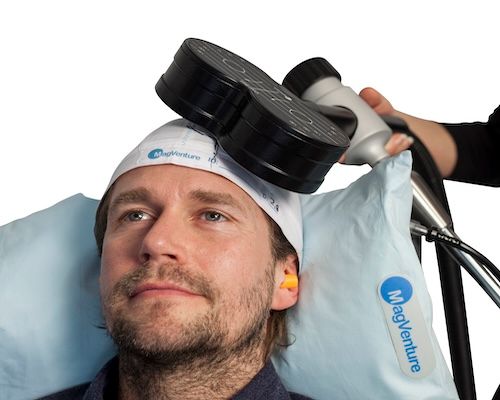 Depression
Mehboob Ali Nazarani, M.D. · Dec 10, 2024 · 3 min read
Is TMS Appropriate for Me?
Who TMS is a good fit for, who it is not, and the questions your psychiatrist will work through with you before recommending it.
Read articleFind out whether the five-day protocol fits
The first step is a consultation with Dr. Nazarani. He will review your history and tell you whether this protocol is right for you, or whether standard TMS or a different schedule would serve you better.