TMS for OCD
TMS is FDA-cleared for the treatment of obsessive-compulsive disorder. It offers a non-medication treatment pathway for patients whose symptoms have not responded adequately to therapy, medication, or both.
OCD involves different brain circuits than depression, and TMS for OCD targets different regions using distinct protocols. The evidence base is growing, and we offer both standard and enhanced approaches, including protocols that pair TMS with a medication designed to amplify its effect on the brain.
How TMS Works for OCD
OCD is associated with overactivity in the cortical-striatal-thalamic-cortical circuit, particularly in the medial prefrontal cortex and anterior cingulate cortex. TMS targets these areas to modulate circuit activity and reduce the intensity of obsessive thoughts and compulsive behaviors.
Standard Protocol
A standard course for OCD is 30 sessions targeting the medial prefrontal cortex, fewer than the 36-session standard course for depression. This is the FDA-cleared approach, cleared as an adjunct treatment, and is typically covered by insurance when treatment-resistance criteria are met.
D-Cycloserine Enhanced Protocol
Pairs TMS with low-dose D-cycloserine, a medication that enhances the brain's ability to form new neural connections in response to stimulation. A randomized controlled trial published in the American Journal of Psychiatry (2025) found that this combination produced significantly greater symptom reduction than TMS alone, with a large effect size. This is an off-label, evidence-based approach available as a self-pay option.
Accelerated and Compressed Protocols
Condense the treatment timeline for patients who need a faster course. These are available as self-pay options.
The protocol decision is made during your consultation with Dr. Nazarani based on your symptoms, treatment history, and clinical picture.
Who Is a Candidate?
You have tried therapy and medication without adequate results.
If exposure and response prevention (ERP) therapy, medication, or both have not provided sufficient improvement, TMS is a clinically supported next step. Insurance typically covers the standard TMS protocol for OCD when treatment-resistant criteria are met.
You prefer a non-medication approach or want to enhance your current treatment.
TMS can be pursued as a standalone treatment or alongside ongoing therapy. Some patients use TMS to reduce symptom severity enough to make therapy more effective.
You are interested in enhanced protocols.
The D-cycloserine enhanced protocol offers an evidence-based approach that may produce larger symptom reductions than standard TMS alone. This option is available as self-pay and is discussed during your consultation.
TMS for OCD is not appropriate for patients with metal implants in or near the head, a history of seizures, or certain neurological conditions. Candidacy is evaluated during your consultation.
What the Research Shows
The evidence base for TMS in OCD is growing, with both FDA-cleared protocols and newer enhanced approaches showing meaningful results. Response in OCD is typically defined as a 30% or greater reduction in symptom severity, measured by the Yale-Brown Obsessive Compulsive Scale (Y-BOCS).
Standard Protocol (FDA-Cleared)
In the pivotal multicenter randomized trial, 38% of patients achieved a clinical response after 6 weeks of active TMS, compared to 11% with sham treatment. At one-month follow-up, the response rate in the active group rose to approximately 45%, suggesting continued improvement after treatment ends. Larger real-world clinical datasets have reported response rates of 52–73%.
Durability
Among patients who respond, the benefits appear durable. Observational follow-up data show that approximately 87% of responders maintained their improvement for at least one year, and roughly 62% still did not require additional OCD treatment at the two-year mark.
D-Cycloserine Enhanced Protocol
In a randomized, triple-blind, sham- and placebo-controlled trial (McGirr et al., 2025), patients who received TMS paired with D-cycloserine showed significantly greater improvement than those receiving TMS alone or sham treatment. The combination produced a mean Y-BOCS reduction of approximately 9.5 points with a large effect size — substantially larger than the typical 2–3 point advantage over sham seen in standard TMS trials for OCD. This was a small trial (24 patients) that was terminated early due to drug supply issues, and independent replication is needed. However, the results were published in the American Journal of Psychiatry and represent some of the strongest effect sizes reported for any TMS protocol in OCD.
OCD symptoms are often chronic and deeply ingrained. TMS typically produces meaningful reduction in symptom severity rather than complete elimination. Not everyone responds, and Dr. Nazarani will discuss realistic expectations during your consultation.
Sources: Carmi et al. (2019), Roth et al. (2021), McGirr et al. (2025).
What else you should know
This page covers TMS for OCD specifically. For details on how TMS treatment works, what sessions feel like, and cost and insurance information, see our TMS Overview.
Frequently Asked Questions
For FDA-cleared conditions, meaning depression, adolescent depression, and OCD, most major plans cover standard TMS when treatment-resistance criteria are met. That includes Aetna, BCBS, Cigna, Medicare, Tricare, and other major plans. We verify your benefits as part of the TMS evaluation.
A standard course for depression is typically 36 sessions over 4 to 6 weeks. A standard course for OCD is 30 sessions. Accelerated protocols deliver a full course in far less time: 45 sessions over three weeks, 50 sessions over five days, or 20 sessions in a single day. The number is determined at your consultation.
Yes. The MagVenture system we use is cleared for OCD as an adjunct treatment. OCD protocols target different brain regions than depression protocols, and a standard OCD course is 30 sessions. It is often covered by insurance when treatment-resistance criteria are met.
TMS for OCD targets the medial prefrontal cortex and anterior cingulate, while TMS for depression targets the left dorsolateral prefrontal cortex. The treatment parameters, session structure, and clinical goals are distinct, and a standard OCD course is 30 sessions rather than 36.
Not necessarily, but your therapy history is part of the candidacy evaluation. TMS can be pursued alongside therapy, and some patients find that TMS reduces symptom severity enough to make ERP more effective.
D-cycloserine is an existing medication, originally developed as an antibiotic, that at low doses enhances the brain's ability to form new neural connections. It has been studied extensively in combination with exposure therapy for anxiety disorders and more recently with TMS. In the published trial, the combination was well-tolerated with no serious adverse events. Dr. Nazarani will discuss whether this protocol is appropriate for you.
TMS typically reduces the severity of obsessive thoughts and compulsive behaviors rather than eliminating them entirely. A meaningful response, generally defined as a 30% or greater reduction in symptom severity, can significantly improve daily functioning and quality of life.
Learn More About TMS
 Depression
Mehboob Ali Nazarani, M.D. · Sep 26, 2026 · 8 min read
Why Can't I Feel Happy Anymore? Causes of Emotional Numbness
Can't feel happy anymore? A psychiatrist explains anhedonia, the inability to feel pleasure: its causes, how it differs from numbness, and its treatment.
Read article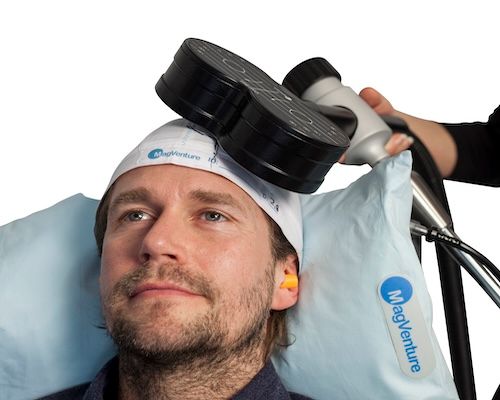 Depression
Mehboob Ali Nazarani, M.D. · Dec 10, 2024 · 3 min read
Is TMS Appropriate for Me?
Who TMS is a good fit for, who it is not, and the questions your psychiatrist will work through with you before recommending it.
Read article Depression
Mehboob Ali Nazarani, M.D. · Dec 10, 2024 · 2 min read
Long-Term Benefits of TMS Therapy - Sustaining Relief from Depression
What the research says about how long TMS results last, relapse rates after a course of treatment, and what maintenance sessions involve.
Read articleFind Out If TMS for OCD Is Right for You
The first step is a consultation with Dr. Nazarani to evaluate whether TMS is appropriate for your situation and which protocol — including the D-cycloserine enhanced option — fits best. You are not committing to treatment. You are finding out if it makes sense for you.