The Causes of Poor Sleep and Insomnia
By Mehboob Ali Nazarani, M.D.
Published March 13, 2025 · Last reviewed March 9, 2026 · 9 min read · Insomnia
If you regularly struggle to fall asleep or stay asleep, you are dealing with one of the most common health complaints there is. About one in three adults experiences insomnia at some point, and chronic insomnia, where the problem lasts three months or longer, affects roughly 10 percent of the population. The causes are rarely simple, which is why so many people feel stuck.
This post walks through the major categories of insomnia causes: habits, stress, mental health conditions, medical problems, and medications. Understanding what is driving your sleep trouble is the most important step toward fixing it.
Sleep Habits That Work Against You
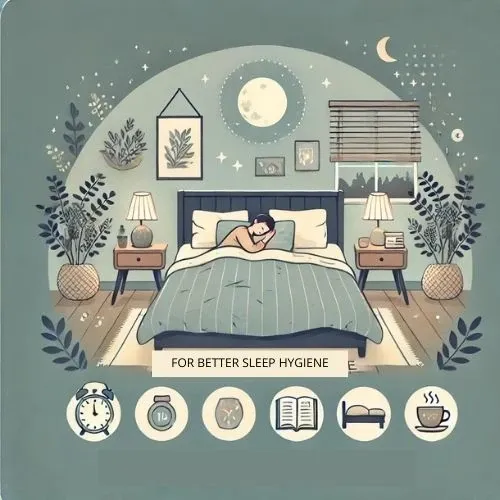
The most fixable cause of poor sleep is what clinicians call sleep hygiene. This is the collection of daily routines and environmental factors that shape how well you sleep. Many people unknowingly maintain habits that keep their nervous system activated at exactly the wrong time.
Inconsistent timing is one of the biggest offenders. Your body's circadian rhythm depends on regularity. When you go to bed at 10 PM on weekdays but stay up past midnight on weekends, you are essentially giving yourself jet lag every Monday morning. The brain's internal clock needs consistent cues to function well.
Screen use before bed compounds the problem. Phones, tablets, and laptops emit light that suppresses melatonin production and keeps your brain in an alert, information-processing mode. The content itself matters too. Scrolling social media or reading the news activates your mind in ways that are incompatible with winding down.
Caffeine and alcohol deserve honest evaluation. Caffeine has a half-life of about five to six hours, meaning a coffee at 3 PM still has half its stimulant effect at 9 PM. Alcohol is more deceptive because it does help people fall asleep initially, but it fragments sleep in the second half of the night and reduces the deep sleep your body needs most.
Your bedroom environment matters more than most people realize. A room that is too warm, too noisy, or too bright signals to your brain that it is not safe or comfortable enough to fully let go. Even subtle disruptions, like a partner's snoring or light from a hallway, can prevent you from reaching deeper sleep stages.
If you suspect your habits are a factor, our guide on 10 tips for better sleep hygiene is a practical starting point.
Stress and an Overactive Mind
Stress is the most common trigger for short-term insomnia. When your brain perceives a threat, whether it is a work deadline, a financial concern, or a relationship conflict, it activates the body's stress response. Cortisol and adrenaline rise, heart rate increases, and your body shifts into a state of vigilance. This is the opposite of what sleep requires.
The pattern often feeds itself. You lie awake worrying, then start worrying about the fact that you are not sleeping, which makes you more alert. Over time, the bed itself can become associated with frustration and wakefulness rather than rest. This learned association is one of the key mechanisms that turns a few rough nights into a chronic problem.
Major life transitions frequently trigger insomnia episodes. Loss, job changes, moves, and relationship disruptions can all set it off. In many cases the sleep problems resolve once the stressor passes. But for some people, the insomnia persists long after the original stress has faded because the brain has learned new patterns around sleep.
Developing a wind-down routine can interrupt this cycle. Techniques like deep breathing, progressive muscle relaxation, or writing down your thoughts before bed give your nervous system a clear signal to shift gears. Our post on effective stress management strategies covers several approaches that pair well with better sleep habits.
Mental Health Conditions
Sleep and mental health are so closely intertwined that it is often difficult to tell which problem came first. Rather than thinking of insomnia as a simple symptom of a psychiatric condition, it helps to understand the relationship as bidirectional: poor sleep worsens mental health, and mental health conditions disrupt sleep.
Depression is one of the most common psychiatric causes of insomnia. People with depression often experience early morning awakenings, waking at 3 or 4 AM and being unable to fall back asleep. Others sleep excessively but never feel rested. The relationship runs both ways: persistent insomnia significantly increases the risk of developing depression, and treating the sleep problem often improves mood.
Anxiety disorders tend to cause difficulty falling asleep rather than staying asleep. The hallmark is a racing mind at bedtime, cycling through worries, replaying conversations, or anticipating problems. Panic disorder can add another layer, with nocturnal panic attacks jolting people awake in a state of intense physical distress.
PTSD creates some of the most severe sleep disruptions. Nightmares, hypervigilance, and difficulty feeling safe enough to relax all interfere with the ability to fall and stay asleep. For people with trauma histories, the vulnerability of sleep itself can feel threatening.
Bipolar disorder disrupts sleep in distinct ways depending on the mood episode. During manic or hypomanic phases, the need for sleep can drop dramatically, sometimes to just a few hours a night without any sense of fatigue. During depressive phases, the pattern more closely resembles the insomnia or hypersomnia seen in other forms of depression.
If you think a mental health condition might be contributing to your sleep problems, addressing both issues together produces the best results. A psychiatric evaluation can help clarify what is going on and guide treatment planning.
Medical Conditions and Physical Causes
Not all insomnia originates in the mind. A number of medical conditions directly interfere with sleep, and they are worth considering if lifestyle changes and stress management have not helped.
Chronic pain from arthritis, fibromyalgia, back injuries, or neuropathy makes it difficult to find a comfortable position and stay asleep. Pain often intensifies at night when there are fewer distractions, and the resulting sleep loss lowers your pain threshold the next day, creating a difficult cycle.
Sleep apnea is one of the most underdiagnosed causes of poor sleep. In obstructive sleep apnea, the airway repeatedly collapses during sleep, causing brief awakenings that the person often does not remember. The hallmark signs are loud snoring, gasping during sleep, and daytime fatigue despite spending enough hours in bed. Sleep apnea requires a sleep study for diagnosis, and effective treatments are available.
Restless legs syndrome produces an uncomfortable urge to move the legs that typically worsens in the evening and at bedtime. The sensations, often described as crawling, tingling, or pulling, are only relieved by movement, which obviously prevents sleep.
Hormonal changes also play a role. Thyroid disorders, particularly an overactive thyroid, can cause insomnia along with a racing heart and restlessness. Menopause frequently disrupts sleep through hot flashes and hormonal shifts. Even normal fluctuations in the menstrual cycle can affect sleep quality.
Acid reflux worsens when lying flat, causing heartburn or discomfort that wakes people up. Neurological conditions like Parkinson's disease and Alzheimer's disease disrupt the brain's sleep-wake regulation directly.
If you suspect a medical cause, your primary care doctor can help with initial evaluation. In some cases, treating the underlying condition resolves the insomnia entirely.
Medications and Substances
Medications are an overlooked cause of insomnia. Several commonly prescribed drug classes can interfere with sleep, including certain antidepressants (particularly SSRIs and SNRIs taken in the evening), stimulant medications for ADHD, corticosteroids, beta-blockers, and some blood pressure medications. Even over-the-counter decongestants and allergy medications can be activating.
If you started a new medication and your sleep worsened around the same time, it is worth discussing the timing and dosing with your prescriber. Sometimes a simple adjustment, like taking the medication in the morning instead of the evening, resolves the problem.
Substance use also deserves honest assessment. Beyond caffeine and alcohol, cannabis can suppress dream sleep and cause rebound insomnia when discontinued. Nicotine is a stimulant that fragments sleep, and overnight nicotine withdrawal can cause early morning awakenings in regular smokers.
When Insomnia Becomes Its Own Condition
Sometimes insomnia persists even after the original trigger is gone. The stressful period ends, the medical issue is treated, the habits improve, but sleep remains elusive. This is chronic insomnia disorder, and it is maintained by learned patterns of arousal and unhelpful beliefs about sleep rather than by an ongoing external cause.
The most effective treatment for chronic insomnia is cognitive behavioral therapy for insomnia, often called CBT-I. This structured approach addresses the thought patterns and behaviors that keep the problem going. Research consistently shows it to be more effective than sleep medications for long-term improvement, and the benefits persist after treatment ends. If you are curious about how CBT works more broadly, our post on understanding cognitive behavioral therapy explains the core principles.
CBT-I typically involves temporarily limiting time in bed to rebuild sleep drive, strengthening the association between the bed and sleep, and addressing beliefs like "I will never be able to sleep normally." It is not a quick fix, but it works for the majority of people who commit to the process.
Finding Your Starting Point
With so many potential causes, it helps to approach the problem systematically. If you want to gauge the severity of your sleep difficulties, the Insomnia Severity Index is a validated screening tool that can help you decide whether self-help strategies are sufficient or whether professional guidance would be worthwhile.
For practical techniques you can try tonight, our post on proven strategies for falling asleep faster offers evidence-based methods that complement the habit changes discussed here.
The most important thing to understand about insomnia is that it is treatable. Whether the cause is a correctable habit, an unmanaged stress response, a mental health condition, or a medical problem, there are clear paths forward. Identifying the cause is the hard part. Once you know what you are dealing with, the solutions become much more straightforward.
At Everhealth Psychiatric Services, we take a whole-person approach to sleep and mental health. If you would like to explore what might be behind your sleep difficulties, request an appointment.
This article is part of our approach to whole-person psychiatric care. If this resonates with your experience, our team is here to help.
Get articles like this delivered monthly
Evidence-based mental health insights from our clinical team.
We respect your privacy. Unsubscribe anytime.

Mehboob Ali Nazarani, M.D.
Board-Certified Psychiatrist
Mehboob Ali Nazarani, M.D.
View full profile →Related Articles
 Sleep
SleepMehboob Ali Nazarani, M.D. · Mar 10, 2025 · 8 min read
10 Tips for Better Sleep Hygiene: Improve Your Sleep Naturally
Ten science-backed ways to improve your sleep hygiene, from your bedroom environment to screen time and evening stress. Steps you can start tonight.
Read article Sleep
SleepMehboob Ali Nazarani, M.D. · Jul 26, 2024 · 2 min read
5 Proven Strategies for Falling Asleep Faster - A Guide to Better Rest
Evidence-based ways to fall asleep faster, from wind-down routines to what to do when you have already been lying awake too long.
Read article Sleep
SleepMehboob Ali Nazarani, M.D. · Jun 28, 2024 · 2 min read
Improving Your Sleep Hygiene for Better Rest
Learn key strategies for enhancing your sleep hygiene in this concise guide. Discover practical tips for a restful night and overall health improvement.
Read article